
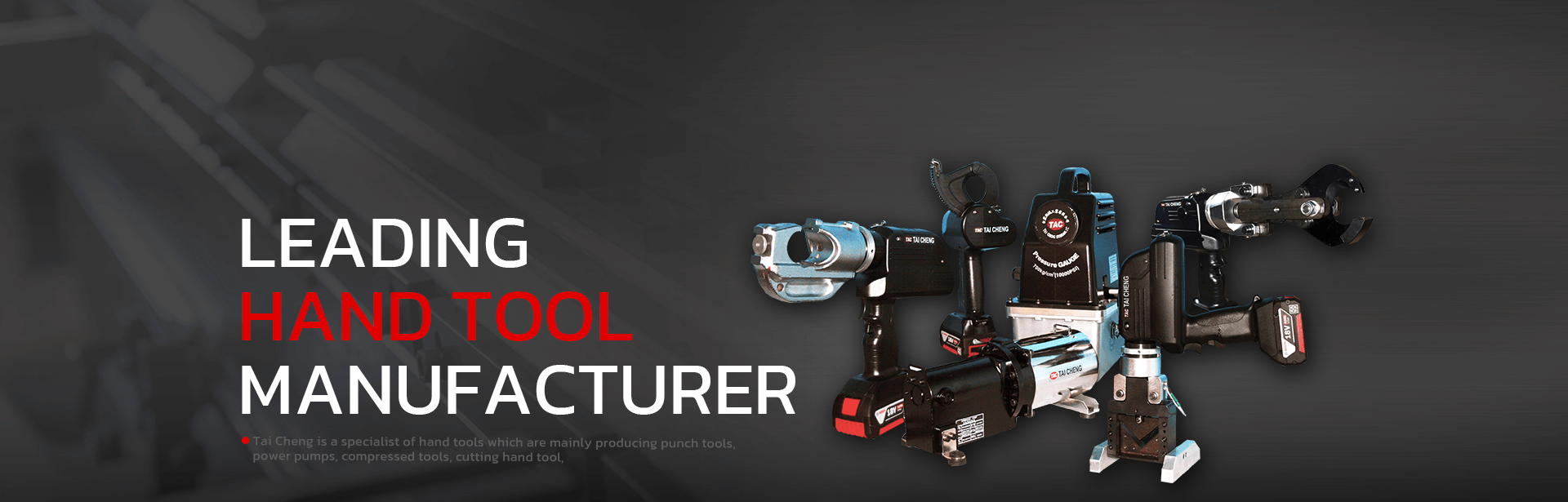
The key to selecting industrial hydraulic tools is not simply looking at maximum output. It is also necessary to evaluate the type of operation, workpiece specifications, frequency of use, operating space, and follow-up maintenance support. Even if a tool provides sufficient output, it may still result in low operating efficiency, incompatible dies, rapid tool wear, or unstable work quality if it is not suitable for the on-site environment.
For industrial sites, power engineering, electromechanical construction, and equipment maintenance, cordless hydraulic tools can improve the efficiency of mobile operations, but they may not replace all hydraulic tools. When selecting tools, it is important to first determine whether the site requires mobility, long-term high-load operation, fixed-station processing, or the combined use of multiple tools. Based on these needs, buyers can then decide on the proper tool configuration and choose the right manufacturing partner.
Table of Contents
1. Why Should Hydraulic Tool Selection Not Be Based Only on Maximum Output?
2. What On-Site Applications Are Cordless Hydraulic Tools Suitable For?
3. What Usage Details Matter for Industrial-Grade Hydraulic Tools?
4. Why Should B2B Buyers Evaluate the Capabilities of Hydraulic Tool Manufacturers?
5. How Does Taizhen Machinery Support On-Site Tool Configuration and Long-Term Use?
1. Why Should Hydraulic Tool Selection Not Be Based Only on Maximum Output?
When selecting hydraulic tools, many people first look at the output tonnage or pressure specifications. However, output is only the basic condition for determining whether a tool can complete the job. It does not necessarily mean the tool will be practical or efficient on-site. In actual construction or fieldwork, it is also necessary to consider the workpiece material, thickness, size, die specifications, working angle, tool weight, and whether the operator can apply force steadily.
For example, cable crimping, terminal crimping, copper and aluminum busbar processing, cutting, punching, and pipe bending may all require hydraulic force assistance, but each process focuses on different requirements. For crimping tools, it is important to check whether the dies match the terminal size. For cutting tools, the blade and material hardness must be compatible. For punching tools, the hole diameter, plate thickness, and positioning method must be considered. If selection is based only on the idea that “the greater the output, the better,” factors such as tool weight, operating flexibility, and maintenance convenience may be overlooked.
A more practical approach is to first clarify the operating conditions:
Frequency of use: Will the tool be used frequently every day, or only occasionally for maintenance?
Type of operation: Is it for fixed-station processing, or does it need to be carried to different job sites for mobile work?
Material conditions: Will it be used repeatedly on a single specification, or will it often involve different materials and sizes?
Clarifying these conditions first, and then choosing manual, separate-type, electric, or cordless hydraulic tools, will better match actual needs than simply comparing specification sheets.
2. What On-Site Applications Are Cordless Hydraulic Tools Suitable For?
The greatest advantage of cordless hydraulic tools is that they reduce dependence on external power sources, hoses, and manual pressurization, allowing workers to operate quickly in more on-site situations. For high-altitude work, outdoor sites, areas near distribution panels, inside equipment, cable line construction, or locations that require frequent movement, cordless tools can usually reduce preparation time and minimize issues caused by hose pulling and restricted job-site traffic flow.
In power engineering and electromechanical construction, cordless hydraulic crimping tools, cutting tools, and punching tools are often used for operations that require mobility. Workers do not need to set up a pump or connect hoses every time, which is especially helpful for small-quantity, multi-point work across different floors or areas. If the tool itself provides stable output, quick oil return, battery management, and safety protection design, it can also make on-site operations more continuous.
However, cordless tools are not suitable for every type of work:
| Scenario | Recommended Tool |
|---|---|
| High-altitude work, outdoor sites, confined spaces, small-quantity multi-point work, and frequent movement | Cordless hydraulic tools |
| Long-term high-load operation, large-volume repetitive processing, and fixed workstations | Separate-type hydraulic tools / high-pressure hydraulic pumps / dedicated machinery |
The value of cordless tools lies in mobility and convenience. However, tool selection should still be based on material specifications, operating frequency, and the actual job-site environment.
3. What Usage Details Matter for Industrial-Grade Hydraulic Tools?
The differences between industrial-grade hydraulic tools are often not reflected only in output force, but become more apparent after long-term use. Key details to pay attention to include:
Whether the tool can deliver stable pressure output
Whether the dies are easy to replace
Whether the grip angle is comfortable to use
Whether the oil return speed affects the work rhythm
Whether the battery life is sufficient
Whether maintenance is convenient
For cordless tools, battery life, charging time, tool weight, and center-of-gravity design directly affect the operating experience. If the tool is too heavy or difficult to hold steadily, operators may become fatigued more easily when working at height, in confined spaces, or during continuous operations, which may also increase positioning errors. If the oil return speed is too slow, each crimping, cutting, or punching cycle will take longer, affecting overall construction efficiency over time.
Hydraulic tools also require attention to dies and consumable parts. Components such as crimping dies, punching dies, blades, and oil seals will gradually wear with usage frequency. If spare parts are difficult to obtain or tool inspection and repair are inconvenient, once work stops on-site, the loss is often not limited to repair costs but may also delay the entire project schedule. Therefore, when selecting hydraulic tools, maintenance, spare parts, repair support, and long-term operating costs should all be taken into consideration.
4. Why Should B2B Buyers Evaluate the Capabilities of Hydraulic Tool Manufacturers?
When purchasing hydraulic tools for B2B applications, the capabilities of the hydraulic tool manufacturer directly affect whether the tools can be used stably over the long term. Procurement does not end with buying a single tool. In many cases, buyers will also need to consider:
Specification expansion
Die compatibility
Maintenance and inspection
Spare parts supply
Integration between different work processes
If a supplier only provides a single tool and does not understand on-site construction workflows, buyers may need to piece together tools from different brands on their own. Although this may appear to reduce costs in the short term, it may lead to the following issues over time:
Dies are not interchangeable
Tool maintenance is handled by multiple sources
Long waiting times for spare parts
Poor integration between old and new tools
Manufacturers familiar with hydraulic tools and industrial applications can help buyers select the right tools based on actual usage scenarios——for example, crimping requirements should be evaluated based on terminal specifications and wire size, while cutting requirements should consider the material and on-site portability. Whether a manufacturer understands real job-site challenges often has a greater impact on long-term usage quality than the price of a single tool.
5. How Does Taizhen Machinery Support On-Site Tool Configuration and Long-Term Use?
Taizhen Machinery has long been dedicated to the manufacturing of hydraulic tools and industrial construction tools. Its product line covers cordless hydraulic tools, hydraulic crimping tools, hydraulic cutting tools, hydraulic punching tools, busbar processing tools, pipe bending tools, and related construction tools. For customers involved in power construction, distribution panel processing, cable work, and industrial maintenance, Taizhen’s advantage is not only providing individual tools, but also supporting tool requirements across different work processes.
In practical procurement scenarios, job sites often do not simply lack a single tool. Instead, they need crimping, cutting, punching, bending, and maintenance operations to work together smoothly. Taizhen understands the operating conditions of hydraulic tools in industrial environments and can help customers evaluate tool configurations based on materials, specifications, work methods, and follow-up maintenance needs. Taizhen can also evaluate crimping, cutting, punching, and bending tools within the same construction workflow, helping reduce the risks of purchasing incorrect specifications or relying on fragmented support.
6. Frequently Asked Questions
Q1: Can cordless hydraulic tools completely replace manual or separate-type hydraulic tools?
Not necessarily. Cordless hydraulic tools are suitable for applications that require mobility, small-quantity multi-point work, or on-site movement. However, for long-term high-load operation, fixed-station processing, or large-volume repetitive work, separate-type hydraulic tools or dedicated equipment may still be more suitable.
Q2: When selecting hydraulic tools, is higher maximum output always better?
No. The maximum output must meet the requirements of the workpiece, but tool weight, die compatibility, operating space, frequency of use, and maintenance convenience are equally important. A tool with excessive output that does not fit the job site may cause operating inconvenience or unnecessary cost.
Q3: What specifications should be considered when choosing cordless hydraulic tools for industrial sites?
It is recommended to consider output force, applicable dies, battery life, charging time, oil return speed, tool body weight, safety protection design, and maintenance support. If the tool needs to be used for long periods, it is also important to confirm whether batteries and consumable parts are easy to obtain.
Q4: Why should B2B buyers pay attention to the manufacturer when purchasing hydraulic tools?
Because B2B procurement usually involves long-term use, spare parts supply, maintenance service, and future expansion. A supplier with manufacturing experience can better help determine whether the tool specifications match on-site requirements, reducing the risk of purchasing the wrong tool or facing insufficient support later.
Q5: After hydraulic tools have been used for a period of time, what signs indicate that maintenance or inspection is needed?
If output becomes unstable, oil return speed becomes abnormal, crimping or cutting quality declines, oil leakage occurs, abnormal noise increases, or battery life becomes noticeably shorter, it is recommended to stop high-load operation and arrange inspection or maintenance to avoid affecting work quality and operating safety.
The key to selecting hydraulic tools is to ensure that tool specifications, on-site operations, and follow-up maintenance can work together over the long term.
If you are looking for hydraulic tool recommendations, or evaluating cordless, separate-type, or industrial-grade hydraulic tools, please contact Taizhen Machinery with your operation type, workpiece specifications, and frequency of use to receive tool configuration recommendations and product selection support.