
The key to high-voltage cable installation is ensuring that the three steps of cutting, stripping, and terminal crimping are properly connected. An uneven cut can affect the stripping length, inaccurate stripping depth may damage the conductor or insulation layer, and mismatched crimping specifications may lead to looseness, overheating, or poor contact.
In power engineering, distribution system installation, and equipment maintenance sites, thick cable processing often needs to be completed within limited working spaces. Therefore, tool selection should not be based only on whether the tool can complete the action. Cable size, material, terminal specifications, die compatibility, and operation frequency should also be considered. Clarifying cable conditions and process arrangements before installation can greatly reduce the risks of rework and future maintenance.
Table of Contents
1. Why Should High-Voltage Cable Installation Not Be Based on a Single Tool?
2. A Clean Cut Is the First Step in Cable Installation Quality
3. Poor Stripping Depth Control Can Lead to Problems in Subsequent Connections
4. Terminal Crimping Requires More Than Checking the Crimp Mark: Specification Matching Also Matters
5. How Should Tools Be Arranged Before Installation Based on Cable Specifications?
6. Taizhen Machinery's Role in Cable Installation from the Perspective of Tool Workflow Integration
1. Why Should High-Voltage Cable Installation Not Be Based on a Single Tool?
High-voltage cable installation may appear to be divided into three steps: cutting, stripping, and crimping. In practice, however, each step affects the next. If cutting causes conductor strand separation, an angled cut, or compression of the outer jacket, it becomes difficult to control the stripping length and depth in the following step. If stripping damages the conductor, insulation layer, or semi-conductive layer, even if the terminal can still be crimped in place, it may leave risks of poor contact or localized overheating.
Therefore, when evaluating installation tools, it is not enough to ask whether “this tool can cut the cable” or whether “this die can crimp the terminal.” The three processes should be evaluated as part of the same installation workflow. High-voltage cable installation usually involves larger cable sizes, thicker outer jackets, and higher safety requirements. If any preparation step is unstable, the issue may eventually affect crimping quality, conduction stability, and long-term operating reliability.
Cutting, stripping, and crimping should be evaluated together so that errors in the previous step do not become risks in the next step.
2. A Clean Cut Is the First Step in Cable Installation Quality
Cutting is the starting point of high-voltage cable installation, and it is also one of the most easily underestimated steps. A suitable cable cutting tool should do more than simply cut the cable. It should keep the cut surface clean and even, preventing conductor strand separation, outer jacket deformation, or excessive compression of the cross-section. If the cut quality is poor, stripping may lead to inaccurate length control, tool jamming, or uneven conductor arrangement.
When selecting a cutting tool, the cable outer diameter, conductor cross-sectional area, copper or aluminum material, whether the cable contains a steel core, and the on-site operation frequency should be confirmed first. The tool requirements for small-quantity maintenance and large-scale construction are different, and thick cables or hard materials should not be handled with ordinary hand tools alone. Common poor cutting conditions include:
| Condition | Possible Impact |
|---|---|
| Angled cut | Inconsistent stripping length and unstable terminal insertion depth |
| Conductor strand separation | Difficult terminal insertion and uneven crimping force distribution |
| Outer jacket compression or deformation | Inaccurate stripping positioning and increased finishing time |
| Unsuitable cutting tool | Low cutting efficiency and possible blade wear |
3. Poor Stripping Depth Control Can Lead to Problems in Subsequent Connections
The key to high-voltage cable stripping is not speed, but precision. Cables usually consist of an outer jacket, insulation layer, semiconductive layer, conductor, and other structures. Each layer has different requirements for cutting depth and surface condition:
| Stripping Condition | Possible Impact |
|---|---|
| Insufficient stripping depth | Terminals or jointing materials cannot be installed properly |
| Excessive stripping depth | May damage the conductor or insulation structure, creating construction risks that are not easy to detect |
| Improper handling of the semiconductive layer | The work may appear complete, but electrical performance may already be affected |
Before using high-voltage cable stripping tools, the cable specifications, stripping length, blade depth setting, and working angle should be confirmed. After stripping, it is also necessary to check whether the stripped surface is even, whether there are obvious blade marks, whether the conductor is damaged, and whether the stripping length meets the requirements of the terminal or jointing material. If multiple cable sizes are used in the same project, it is not recommended to process all cables with the same tool setting. The tool adjustment should be reconfirmed according to each specification.
Although general cutting tools can also remove the outer jacket, in high-voltage cable installation, manual control errors can easily turn into connection problems in later steps. This is especially important when handling the semiconductive layer and insulation layer. Without stable depth control, the work may look complete from the outside, but the electrical performance in subsequent connections may already be affected.
4. Terminal Crimping Requires More Than Checking the Crimp Mark: Specification Matching Also Matters
Terminal crimping is the step in cable installation that is closest to final product quality. However, determining whether crimping is complete should not be based only on whether a crimp mark appears. A proper crimp must create stable contact between the conductor and the terminal while also providing sufficient mechanical holding strength:
| Issue | Possible Cause | Risk |
|---|---|---|
| Insufficient crimping | Insufficient output force or oversized die | Loose terminal and poor contact |
| Excessive crimping | Undersized die or incorrect position | Terminal deformation and conductor damage |
| Crimping offset | Insufficient insertion depth or inaccurate positioning | Uneven force distribution and reduced long-term reliability |
Before installation, terminal specifications, cable size, die size, conductor insertion depth, and crimping position should be confirmed. After crimping is completed, check whether the terminal is cracked, whether the crimp mark is complete, whether too much conductor is exposed, and whether the terminal is loose. If multiple dies are used on-site, proper labeling is also recommended to avoid pairing the same tool with the wrong die.
5. How Should Tools Be Arranged Before Installation Based on Cable Specifications?
Before high-voltage cable installation, it is recommended to arrange tools based on cable specifications and on-site conditions, rather than making temporary decisions after arriving at the job site. For thick cables, large project volumes, or scattered installation points, tool output, weight, portability, and battery life will all affect efficiency. For fixed workstations or large-volume repetitive operations, die management, operating stability, and maintenance convenience should be given greater attention. The following conditions can be reviewed first:
| Item to Confirm | Tool Selection Consideration |
|---|---|
| Cable outer diameter and cross-sectional area | Determines cutting capacity and crimping tool specifications |
| Conductor material | Affects cutting tools, dies, and crimping settings |
| Whether the cable contains a steel core or special structure | Determines whether a specific cutting tool is required |
| Stripping length and cable layers | Determines how the cable stripper should be adjusted |
| Terminal specifications | Determines die size and crimping position |
| Operation frequency and environment | Determines whether manual, hydraulic, or cordless tools should be configured |
The goal of tool configuration is not to prepare every type of tool, but to ensure that the installation workflow can proceed smoothly and consistently. From cutting and stripping to crimping, specifications and tool capabilities should be confirmed at every step. This helps reduce rework and makes on-site installation quality easier to maintain consistently.
6. Taizhen Machinery’s Role in Cable Installation from the Perspective of Tool Workflow Integration
The tools required for high-voltage cable installation are not limited to a single item, but should be configured to work together according to the installation workflow. Cutting tools must match the cable size and material, stripping tools must be able to control cutting depth, and crimping tools must be matched with terminals, dies, and the required output force. If these tools are purchased separately without an overall evaluation, job sites may face issues such as inconsistent tool capabilities or fragmented maintenance support.
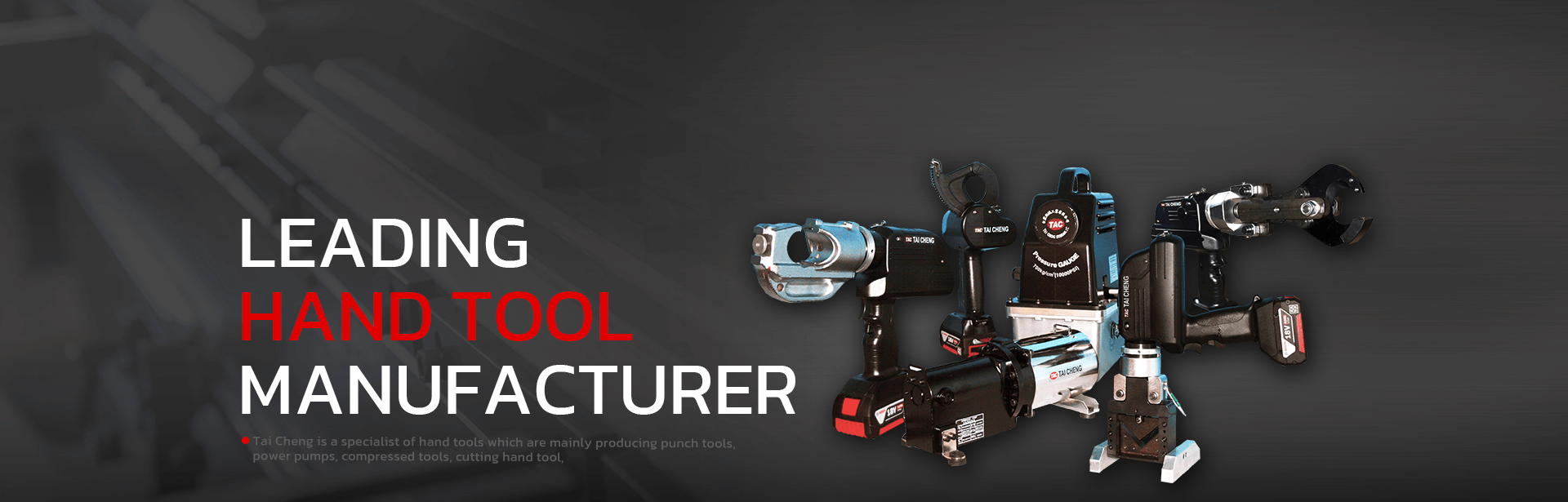
Taizhen Machinery has long been dedicated to the manufacturing of hydraulic tools and power construction tools. Its product line covers hydraulic cutting tools, high-voltage cable stripping tools, hydraulic crimping tools, and related categories. Starting from the cable installation workflow, Taizhen can help engineering teams evaluate the tool configuration required for cutting, stripping, and terminal crimping, making on-site operations easier to connect smoothly.
7. Frequently Asked Questions
Q1: Can high-voltage cables be cut with ordinary scissors or an angle grinder?
It is not recommended. General tools may cause angled cuts, conductor strand separation, outer jacket deformation, or tool damage. High-voltage cables should be cut with suitable cutting tools selected according to cable size, material, and structure.
Q2: If the conductor is accidentally damaged during cable stripping, can crimping still continue?
It is not recommended to continue directly. Conductor damage may affect conductivity and crimping stability. It should be evaluated according to on-site specifications to determine whether rework is required, helping avoid long-term risks.
Q3: Why might overheating still occur after terminal crimping is completed?
Possible causes include insufficient crimping, mismatched dies, incorrect terminal specifications, insufficient conductor insertion depth, or poor contact surface. After crimping, appearance alone should not be used as the only judgment. Specifications and positioning should also be confirmed.
Q4: Can terminals from different brands share the same crimping die set?
Not necessarily. Terminals from different brands may have different dimensions, tolerances, and crimping requirements. They should be confirmed according to terminal specifications and tool recommendations, rather than being shared simply because they look similar.
Q5: Should manual, hydraulic, or cordless tools be selected for on-site installation?
It depends on cable size, operation frequency, installation environment, and mobility requirements. Manual tools may be considered for small-quantity maintenance. For larger cable sizes or higher work volumes, hydraulic or cordless tools are usually more suitable.
If you are evaluating cable cutting tools, cable strippers, or terminal crimping tools, please contact Taizhen Machinery with your cable specifications, installation environment, and terminal type to receive tool configuration recommendations and product selection support.